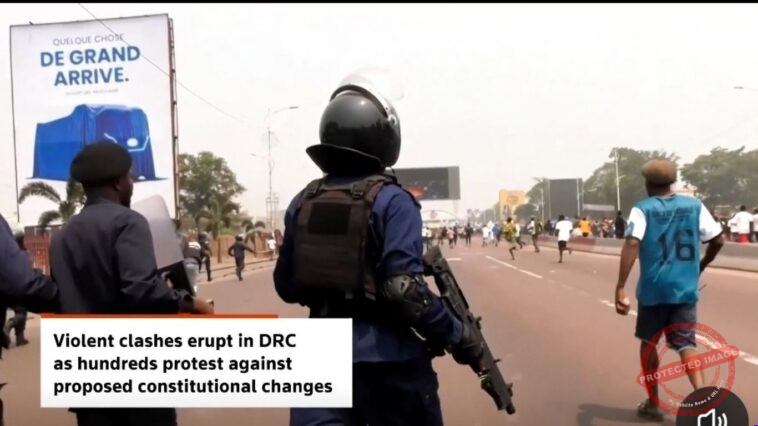
Tear Gas, Clashes Rock DR Congo as Protesters Reject Constitutional Changes Linked to Tshisekedi’s Third-Term Debate
Police fired tear gas and warning shots in Kinshasa as opposition protesters rallied against proposed constitutional changes that critics say could pave the way for President Félix Tshisekedi to seek another term.
Tensions erupted across the Democratic Republic of Congo on Tuesday as hundreds of opposition supporters took to the streets to protest proposed constitutional changes that critics say could open the way for President Félix Tshisekedi to seek a third term.
Police fired tear gas and warning shots to disperse demonstrators in Kinshasa after clashes broke out between opposition protesters and pro-government supporters. Witnesses reported that both groups threw stones and some people brandished machetes before security forces intervened.
Demonstrations were also reported in other cities, including Lubumbashi and Uvira, where authorities had imposed restrictions on the gatherings. The protests were quickly dispersed, while reports indicated that at least 10 people were arrested during the nationwide mobilisation.
The protests were organised by the C64 coalition, an alliance of opposition forces that includes former presidential candidates Martin Fayulu, Moïse Katumbi and Delly Sesanga. The coalition has opposed Tshisekedi’s proposed constitutional reforms, describing them as an attempt to alter the rules governing presidential tenure.
Mohamed Eyenga, a senior C64 figure, said several coalition activists had been arrested.
“Many of our activists were unfortunately and arbitrarily arrested,” Eyenga said.
Police authorities disputed the characterisation of the arrests, with Kinshasa provincial police commander General Blaise Kilimbalimba saying peaceful demonstrators had not been arrested.
The Democratic Republic of Congo’s current constitution limits a president to two five-year terms. Tshisekedi, who first took office in 2019 and won re-election in 2023, is due to complete his second term in 2028.
The political dispute centres on proposals for constitutional reform. Parliament adopted legislation in June allowing constitutional changes to be put to a referendum, while members of Tshisekedi’s governing coalition have backed changes that could affect the existing presidential term-limit framework.
Opposition parties and the Catholic Church have criticised the proposed reforms. C64 argues that the changes could ultimately enable Tshisekedi to remain in office beyond 2028, while the government has defended the constitutional process and says political rights, including the right to protest, must be exercised lawfully.
Tshisekedi has previously indicated that he would be willing to seek another term if voters approved such a move through a referendum, although the current constitutional framework restricts presidential tenure.
The latest unrest comes about three weeks after Tshisekedi announced plans for a national dialogue involving opposition parties, civil society organisations and religious leaders.
Opposition groups have expressed reservations about the initiative, while the proposed dialogue would not include the M23 rebel group and other armed groups controlling parts of eastern Congo.
The political confrontation is unfolding alongside major security and public-health challenges. The country continues to face fighting involving the Rwanda-backed M23 rebellion in the east, while authorities are also dealing with a serious Ebola outbreak. Rwanda denies supporting the M23.
Tuesday’s demonstrations followed earlier protests in Kinshasa and other parts of the country over the proposed constitutional changes. The renewed mobilisation signals that the debate over Congo’s constitutional framework and the 2028 presidential succession remains a major source of political tension.
With more than two years before the scheduled presidential election, the dispute over presidential term limits is already driving renewed confrontation between Tshisekedi’s supporters and opposition forces.Reject Constitutional Changes Linked to Tshisekedi’s Third-Term Debate