The Nigerian Electricity Regulatory Commission (NERC) has introduced a new regulatory framework allowing eligible businesses and electricity consumers with approved solar power systems to export surplus electricity to distribution companies and receive credits against their electricity bills.
The initiative, known as the Net Billing Regulations 2026, commenced on June 3, 2026, and is designed to encourage renewable energy adoption, improve electricity supply reliability and create opportunities for private investment in distributed power generation.
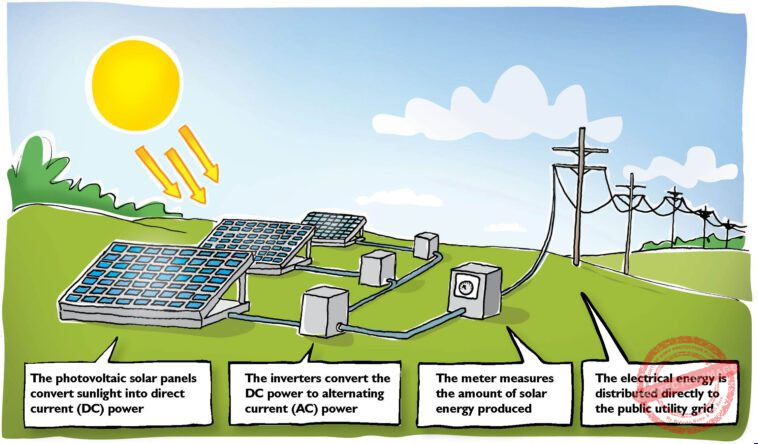
Under the framework, eligible customers, known as “prosumers”, can generate electricity from their own solar photovoltaic systems, use the power they need and send excess electricity into the network operated by their electricity distribution company (DisCo).
In return, the exported electricity earns credits that can be used to reduce the customer’s electricity bills in subsequent billing periods.
However, the scheme does not mean that every Nigerian household with rooftop solar panels can automatically sell electricity to the grid. The regulations set specific capacity limits and technical requirements that prospective participants must satisfy.
According to NERC, eligible renewable energy installations must have an installed capacity of at least 50 kilowatt-peak (kWp) and no more than 1.5 megawatt-peak (MWp). This makes the scheme particularly relevant to commercial and industrial users, including factories, offices, shopping complexes and other facilities with substantial electricity demand.
To participate, customers must be connected to a licensed distribution company’s network and install systems that comply with the applicable technical, safety and regulatory standards.
Applicants must also obtain approval from their DisCo following a technical feasibility assessment, execute a Net Billing Agreement and register with NERC. Approved participants will receive appropriate bidirectional metering facilities to record electricity imported from the grid and surplus energy exported to it.
A key feature of the new framework is that exported electricity is credited at a regulated export tariff, which differs from the retail tariff customers pay when purchasing electricity from their DisCo.
Consequently, customers will not necessarily receive the same value for electricity exported as they pay for power consumed from the grid. The arrangement is designed to provide bill savings rather than guarantee a direct cash income from surplus generation.
The regulations also provide for excess credits to be carried forward to offset eligible future electricity bills, subject to the framework’s settlement and expiry provisions. Customers should therefore review the applicable terms before investing in a system primarily to export power.
The value of exported electricity can also depend on the time it enters the grid and whether the installation meets additional requirements for peak-period credits. Under the regulations, access to the higher peak export tariff is linked to qualifying, verified battery storage.
NERC said the regulations are intended to promote renewable energy technologies, strengthen energy security, encourage private-sector participation in electricity generation, reduce greenhouse gas emissions and support the safe integration of distributed renewable power into electricity networks.
The policy comes as businesses and other electricity users increasingly explore solar energy to reduce their dependence on grid electricity and conventional generators.
For companies operating energy-intensive facilities, the framework could provide an additional financial benefit from approved solar installations by allowing surplus generation to offset part of their electricity costs. Nevertheless, the actual savings will depend on system capacity, electricity consumption patterns, export tariffs, connection costs and compliance with the regulations.
Interested customers are advised to contact their electricity distribution company to request a technical feasibility assessment and obtain details of its application procedure, connection requirements and applicable tariffs.
The full Net Billing Regulations 2026 are available through the Nigerian Electricity Regulatory Commission’s official website.

 Shola Akinyele
45 Views













 WhatsApp us