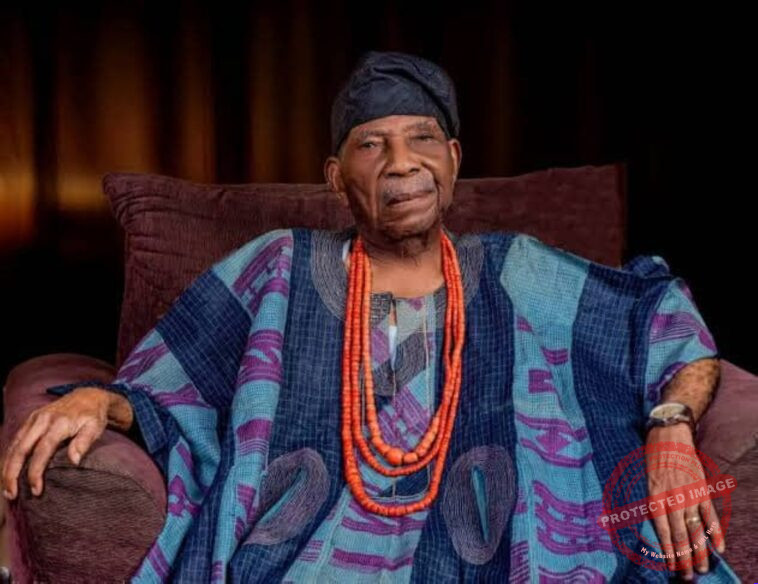
President Bola Ahmed Tinubu has mourned the death of Pa Reuben Famuyide Fasoranti, the revered Afenifere leader and Yoruba elder statesman, who died at the age of 100, describing him as one of the last great titans of Chief Obafemi Awolowo’s progressive political family.
Tinubu also recalled a deeply personal encounter with the late statesman in 2022, when Fasoranti reportedly prayed that he would become Nigeria’s President during his lifetime, a prayer the President said God answered.
In a condolence statement issued on Tuesday, October 20, 2026, Tinubu expressed profound sadness over the death of the centenarian, extending condolences to the Fasoranti family, the people of Akure Kingdom, the Ondo State Government and people, the South-West region and the entire Afenifere family.
The President described the late Yoruba leader as an icon of integrity, discipline, selflessness and unwavering commitment to the welfare of the Yoruba people and the unity and progress of Nigeria.
“I received with profound sadness the news of the passing of Pa Reuben Famuyide Fasoranti,” Tinubu said, describing him as “our father” and one of the last great titans of Awolowo’s progressive political tradition.
Tinubu noted that Fasoranti’s century-long life was defined by principled leadership, public service and an enduring commitment to the development of Nigeria.
According to the President, Fasoranti distinguished himself throughout his career, beginning as an educationist and school principal before serving as Commissioner for Finance in Ondo State and later emerging as a prominent leader of Afenifere, the Yoruba socio-political organisation.
He said the elder statesman remained committed to the principles of true federalism, social justice and a Nigeria that works for all, adding that he made immense contributions to the country and risked his life in the struggle for the democracy Nigerians enjoy today.
“Pa Fasoranti distinguished himself in every respect: in his disciplined, Spartan way of life, his belief in principles, and his commitment to noble causes,” Tinubu said.
The President lamented that Nigeria would miss Fasoranti’s wisdom, moral authority and fatherly counsel, particularly at a time when the country needed experienced leaders and voices of reason.
“Our nation will sorely miss his voice of wisdom, moral authority, and fatherly counsel, especially now, when we need his guidance most,” he added.
Tinubu also recalled attending Fasoranti’s 100th birthday celebration on May 11, 2026, describing the occasion as a celebration of not just longevity but a remarkable legacy of honour and service.
However, the President’s most personal recollection centred on his visit to Fasoranti’s residence in Akure in 2022, when he informed the elder statesman of his intention to contest the presidency.
According to Tinubu, Fasoranti expressed confidence that he would become President while he was still alive.
“Pa Fasoranti told me I would be President in his lifetime, and God answered his prayer,” Tinubu said.
The President explained that he had hoped the respected statesman would live long enough to witness his second term in office and the full benefits of Nigeria’s anticipated economic growth and prosperity.
Despite the loss, Tinubu urged Nigerians to be thankful for the late leader’s long life, describing it as one marked by service, grace and fulfilment.
He prayed for the peaceful repose of Fasoranti’s soul and asked God to comfort the family and all those mourning the elder statesman.
“May his gentle soul rest in perfect peace. May God comfort all who mourn him and grant his family the fortitude to bear this great loss,” the President said.
Fasoranti’s death marks the loss of one of the most influential figures in Yoruba socio-political affairs and Nigeria’s progressive political tradition. His legacy is associated with principled leadership, democratic struggles, public service and a longstanding advocacy for restructuring and true federalism.
His passing is expected to draw tributes from political leaders, traditional institutions, civil society groups and members of the Afenifere family, who regarded him as a symbol of integrity and a custodian of the political ideals associated with Awolowo.

 Shola Akinyele
11 Views













 WhatsApp us
Comments