
 Shola Akinyele
Follow
X
Follow
The United States and Iran are locked in high-stakes diplomatic maneuvering, edging closer to a massive multi-nation framework aimed at halting the war in the Middle East and reopening the economically vital Strait of Hormuz. Following days of intense back-channel negotiations, a senior Trump administration official revealed that a broad template has been established to defuse the global crisis. However, a final signature remains heavily stalled. President Donald Trump has warned he will not be rushed into a subpar agreement, while fierce, conflicting pushback from Tehran over its highly enriched uranium stockpile threatens to unravel the tentative truce.
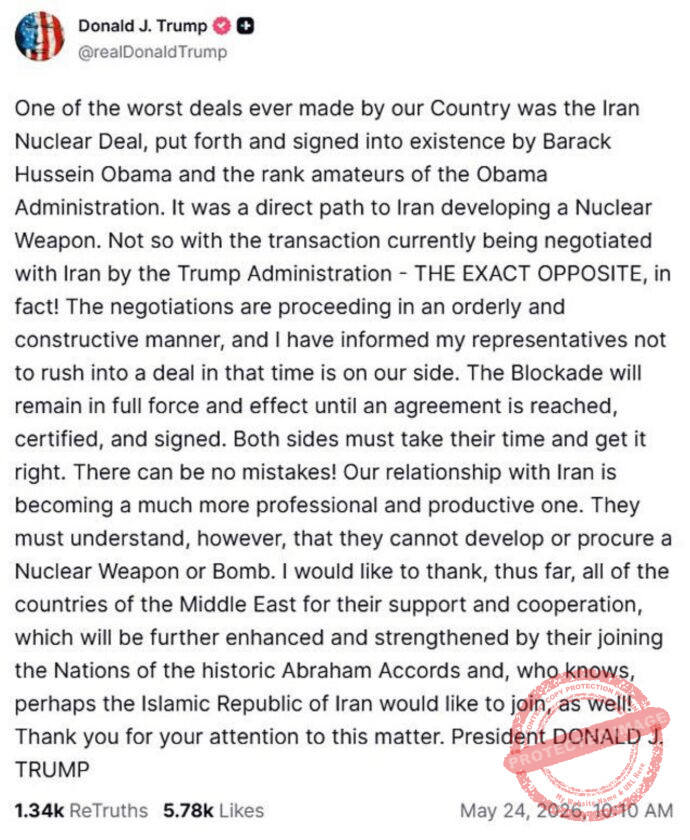
Taking to Truth Social to cool expectations after a weekend of intense speculation, President Trump emphasized that Washington is holding all the leverage. “The negotiations are proceeding in an orderly and constructive manner, and I have informed my representatives not to rush into a deal in that time is on our side,” Trump wrote. He made it clear that the pressure will not let up, adding, “The Blockade will remain in full force and effect until an agreement is reached, certified, and signed. Both sides must take their time and get it right. There can be no mistakes!”
The architectural backbone of the emerging deal, labeled by some regional outlets as a preliminary Memorandum of Understanding, relies on a proposed 60-day ceasefire extension mediated in part by regional partners like Pakistan. Under the drafted terms, the critical maritime chokepoint would see immediate, structural changes to relieve a choking global economy. Iran would agree to clear naval mines it deployed in the Strait of Hormuz and allow commercial shipping vessels to pass freely without arbitrary tolls. In direct exchange, the United States would suspend the aggressive naval blockade on Iranian ports that has been strictly enforced since April, opening a window for temporary, conditional sanctions relief on oil and gas.
The proposed agreement would also trigger negotiations regarding the partial unfreezing of roughly $12 billion in restricted Iranian assets currently held in Qatari accounts. However, the Trump administration has tied long-term economic relief to an absolute ultimatum, operating under a strict “No Dust, No Dollars” policy. White House insiders state bluntly that Iran will not receive permanent sanctions relief unless it performs on its nuclear commitments. The “dust” in question refers to Iran’s volatile stockpile of highly enriched uranium.














 WhatsApp us
Comments