

 Adekunbi Ero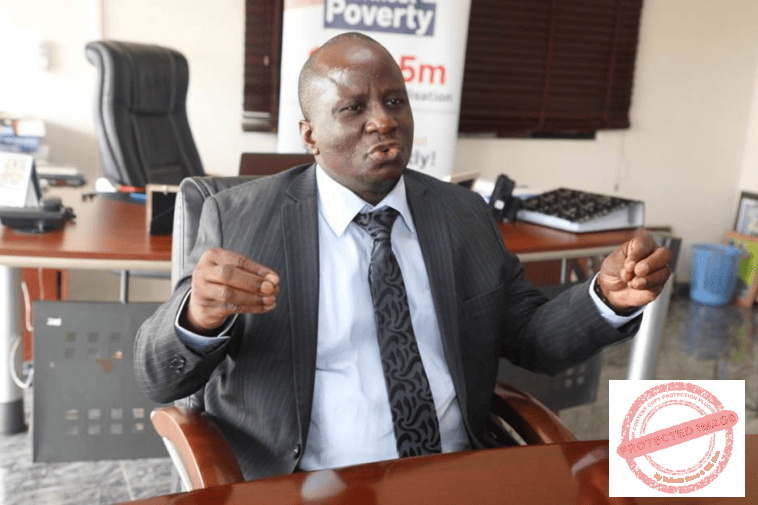
Follow
The executive director of Africa Network for Environment and Economic Justice (ANEEJ), Rev. David Ugolor has sent a save-our-soul (SOS) message to President Bola Ahmed Tinubu to intervene urgently in fixing the very deplorable Benin-Sapele-Warri Expressway, urging him to declare an infrastructure emergency on the road which connects Edo and Delta States.
In an Open Letter to President Tinubu, which was copied Governor Monday Okpebholo and his Delta State counterpart, Governor Sheriff Oborevwori, the managing director of the Niger Delta Development Commission, (NDDC) and some political leaders, Rev. Ugolor called for the establishment of a Joint High-Level Intervention Task Force in collaboration with the Federal Ministry of Works.
The executive director, in the letter titled, “Rescuing the Benin–Sapele–Warri Corridor: A Test of Leadership and Cooperative Governance”, urged President Tinubu to direct accelerated reconstruction of all failed sections, remove administrative bottlenecks and ensure that adequate funding and effective supervision remain priorities until completion.
The ANEEJ boss also urged the Federal Ministry of Works and the NDDC to “publish comprehensive information on contracts, funding releases, implementation milestones and expected completion dates for projects along this corridor,” stressing that “Public confidence grows when information is openly shared.”
Ugolor explained that there is no better opportunity for exceptional leadership as the federal government, Edo and Delta States governments are all led by the ruling All Progressives Congress (APC), an opportunity for seamless cooperation across these levels of government to resolve a challenge of immense regional and national importance.
Lamenting that the highway and its connecting corridors have deteriorated into one of the greatest infrastructure failures in Southern Nigeria, Ugolor noted that what should have been a strategic gateway to the Niger Delta, has become a corridor of hardship, insecurity and economic decline.
The activist said as a son of the Niger Delta and a civil society advocate who had spent more than three decades promoting transparency, accountability and sustainable development, he was of the strong opinion that silence is no longer an option.
Expressing the frustrations commuters experience on the road, Ugolor regretted that thousands of Nigerians endure hours of avoidable delays, damaged vehicles, escalating transport costs and significant economic losses.
According to him, “Businesses struggle to move goods. Farmers cannot access markets efficiently. Students and workers arrive late or abandon journeys altogether. Patients requiring urgent medical attention face dangerous delays that can cost lives.”
He also noted that the growing insecurity along sections of the corridor, coupled with the deplorable condition of the road, has created opportunities for kidnappers and other criminal elements who prey on stranded motorists and passengers.
Ugolor further lamented that families had endured kidnappings, paid enormous ransoms, buried loved ones and continue to live with the trauma of violence that should never have been allowed to flourish.
Going by the current state of the dilapidated expressway, he said it was no longer merely a road maintenance issue but a public safety emergency, an economic emergency and a governance emergency.
Recalling that before 1991, Edo and Delta States formed the old Bendel State, Ugolor noted that the separation was intended to deepen development and bring government closer to the people.
He therefore asserted that “More than three decades later, citizens are entitled to ask whether that aspiration has been fulfilled when one of the most important roads connecting both states has deteriorated to this extent.”
Follow Us on Social Media










 and then
  WhatsApp us
Comments