Nigeria may soon witness one of the most significant security reforms in its democratic history as the constitutional framework required for the establishment of State Police nears completion.
The Presidency disclosed on Thursday that substantial progress has been made toward creating a decentralized policing system, a key component of President Bola Ahmed Tinubu’s security reform agenda.
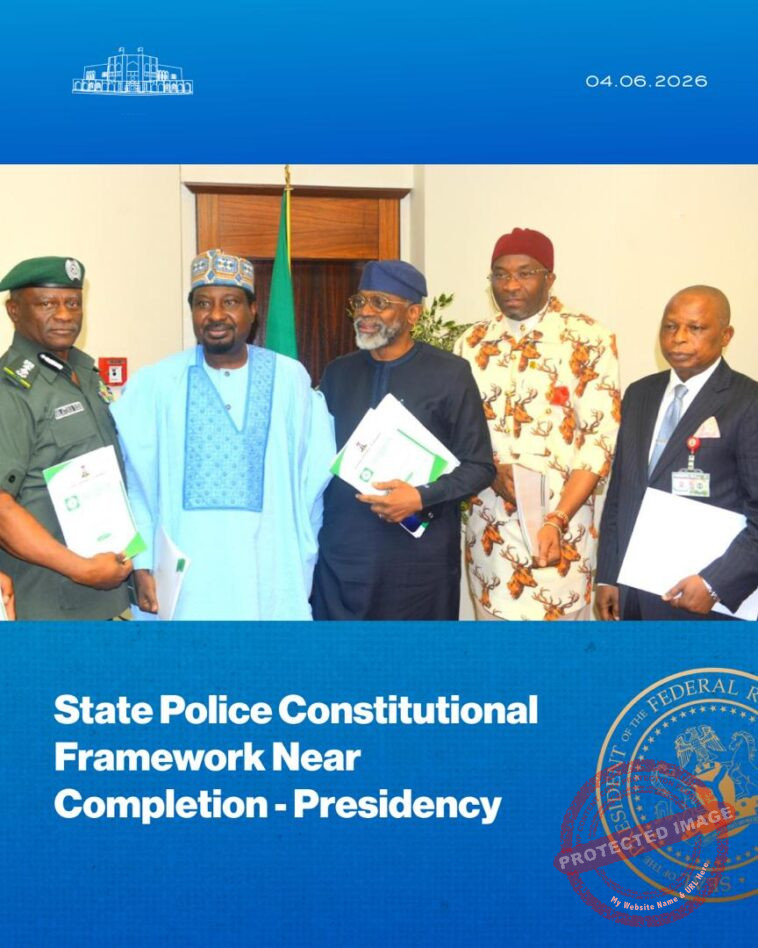
Chief of Staff to the President, Hon. Femi Gbajabiamila, revealed the development while addressing State House Correspondents after a high-level consultative meeting on State Police held at the Presidential Villa in Abuja.
According to Gbajabiamila, discussions initiated several months ago following President Tinubu’s directive have advanced considerably, with stakeholders now concentrating on developing the legal and constitutional structures necessary for implementation.
“We started deliberations in the last three or four months on how to go about the establishment of state police as directed by Mr President,” he said.
He explained that the complexity of the proposal required extensive consultations and careful legal scrutiny, noting that the process could not be rushed.
“Establishing state police is not something that you can do with the snap of the fingers. There is a lot involved in terms of constitution and legalities. Thankfully, we have now gained a lot of traction,” Gbajabiamila stated.
The Chief of Staff expressed confidence that the constitutional amendment process would soon be concluded, paving the way for the passage of enabling legislation needed to formally establish State Police across the country.
The proposed reform has been strongly championed by President Tinubu as part of broader efforts to address Nigeria’s growing security challenges, including terrorism, banditry, kidnapping, communal clashes, and other criminal activities affecting various regions.
Government officials believe that decentralizing policing powers will improve intelligence gathering at the grassroots level, strengthen community-based security operations, and enable quicker responses to local threats.
The consultative meeting brought together several top government officials, including Deputy President of the Senate Jibrin Barau, Deputy Speaker of the House of Representatives Benjamin Kalu, Inspector-General of Police Tunji Disu, and other senior stakeholders involved in the ongoing reform process.
Observers say the successful implementation of State Police could fundamentally reshape Nigeria’s security architecture by granting greater responsibility to state governments in maintaining law and order within their jurisdictions.
The Presidency is expected to receive a comprehensive report from the consultations, which will guide the next phase of the initiative and determine the timeline for legislative action.
If successfully enacted, State Police could become one of the most far-reaching constitutional and security reforms in modern Nigerian history, marking a new chapter in the country’s approach to safeguarding lives and property.
















 and then
  WhatsApp us