Viral Video Exposes Brutal 4:15 A.M. Ibadan-to-Lagos Commute as Rising Rents Push Workers Out of the City
Shocking POV footage of a woman’s exhausting daily journey to Lagos for work sparks national debate over housing costs, traffic congestion, and Nigeria’s growing commuter crisis.
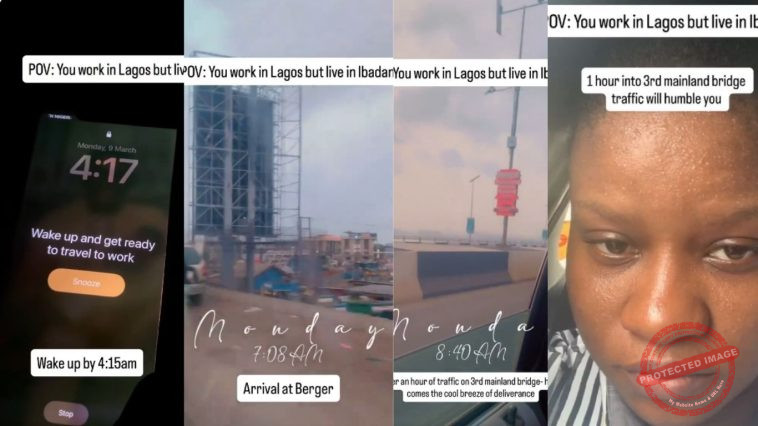
A gripping viral video showing a woman leaving Ibadan at 4:15 a.m. to get to work in Lagos has sparked widespread debate across Nigeria, highlighting the extreme sacrifices many workers now make as soaring housing costs push residents out of the country’s commercial capital.
The point-of-view footage, shared by Nigerian social media personality Dami Adenuga, captures the commuter beginning her journey in the early hours of the morning from Ibadan. In the dark, quiet streets before sunrise, she leaves home to catch the first available vehicle heading toward Lagos, hoping to beat the notorious traffic that often cripples movement into the city.
The video documents the journey in real time—multiple bus transfers, cramped public transport, and long stretches along the busy Lagos–Ibadan Expressway, one of Nigeria’s most heavily trafficked highways. As the trip continues, viewers watch the commuter endure the slow crawl of morning traffic before eventually crossing the iconic Third Mainland Bridge as daylight breaks over Lagos.
For many Nigerians, the footage reflects a harsh and increasingly common reality. With rents in Lagos continuing to rise sharply, a growing number of middle- and lower-income workers are relocating to more affordable cities such as Ibadan in Oyo State. While housing is cheaper, the trade-off is a punishing commute that can stretch between three and five hours each way.
The viral clip quickly sparked thousands of reactions online. Many viewers praised the commuter’s determination and resilience, describing the journey as a powerful example of the “Nigerian hustle spirit.”
Others expressed concern about the health and safety implications of such demanding daily routines. Commenters pointed to the risks associated with sleep deprivation, long hours on the road, fatigue, and stress.
Some users also suggested alternatives such as the Lagos–Ibadan Railway, which offers a faster and more comfortable journey between the two cities. However, ticket prices—often ranging from ₦3,000 to ₦13,000 depending on class—remain out of reach for many workers who would need to use the service daily.
The video has reignited conversations about Nigeria’s urban planning challenges, particularly the widening gap between employment opportunities in Lagos and the rising cost of living within the city.
Experts say the growing number of long-distance commuters reflects deeper structural problems, including limited affordable housing, chronic traffic congestion, rising transport costs, and inadequate mass transit infrastructure.
As the footage continues to circulate widely on social media, many Nigerians are calling for urgent policy solutions, including expanded rail services, improved road infrastructure, and large-scale affordable housing initiatives closer to employment hubs.
For millions of Nigerians navigating the Lagos corridor every day, the viral video captures a familiar truth: the pursuit of economic survival often begins long before sunrise.
















 and then
  WhatsApp us