Nigeria’s security landscape has been thrown into fresh uncertainty following a chilling propaganda release by the Islamic State West Africa Province (ISWAP), in which the extremist group claimed responsibility for setting fire to a Christian village in Adamawa State and issued sweeping threats against Christians across the country.
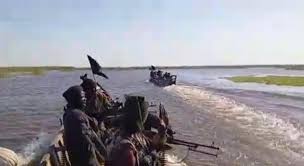
The militant group circulated images and statements online on January 1, alleging that the attack occurred around December 30, 2025. The propaganda, widely shared before being taken down on several platforms, showed houses engulfed in flames and carried messages portraying Christians as legitimate targets unless they convert to Islam or submit to demands framed in extremist ideology.
Nigerian authorities have not independently confirmed the claims or verified the authenticity of the images.
Security experts say the message marks a dangerous escalation in ISWAP’s rhetoric, aimed at spreading fear, provoking sectarian tension, and projecting expanded reach beyond its traditional strongholds.
Analysts caution that such propaganda is often designed to exaggerate impact, draw attention, and inspire further attacks rather than provide factual accounts of events.
The release followed closely on the heels of coordinated U.S.–Nigeria air operations carried out on Christmas Day, December 25, targeting suspected ISIS-linked camps in parts of north-west Nigeria. While ISWAP has historically operated in the North-East, including Borno, Yobe, and Adamawa states, experts note that jihadist groups increasingly use online messaging to claim influence in new areas and retaliate symbolically after military setbacks.
ISWAP, a splinter faction of Boko Haram aligned with the so-called Islamic State, has repeatedly targeted civilians, religious communities, and security forces during its decade-long insurgency. Human rights organizations estimate that tens of thousands have been killed and millions displaced in the region, with religious minorities often bearing a disproportionate share of the violence.
International reaction was swift. U.S. Congressman Riley Moore, a prominent advocate for global religious freedom, condemned the threats, describing them as clear evidence of faith-based persecution and calling for sustained international cooperation to protect vulnerable communities.
Within Nigeria, military and intelligence sources say security operations have been intensified in parts of Adamawa following the propaganda release.
Several individuals suspected of acting as informants for extremist groups have reportedly been detained, as authorities work to assess potential threats and prevent reprisals.
Government officials have urged the public to remain calm and avoid amplifying unverified terrorist content, stressing that investigations were ongoing.
Residents in affected and neighboring communities have been advised to stay vigilant and report suspicious activity to security agencies.
As tensions rise, analysts warn that the coming weeks could be volatile, underscoring the need for coordinated security responses, community protection, and accurate information to counter fear-driven narratives pushed by extremist groups.

 Shola Akinyele
172 Views
Shola Akinyele
172 Views











 WhatsApp us