UN Warns Terrorists Are Using Drones and Bitcoin in Nigeria as Digital Warfare Escalates Across the Sahel
UN Security Council report reveals extremist groups are adopting drones, cryptocurrency and encrypted technology to finance operations and launch sophisticated attacks across Nigeria and the Sahel.
The United Nations has raised fresh concerns over the rapidly evolving tactics of terrorist groups operating in northern Nigeria and across the Sahel, warning that extremists are increasingly deploying armed drones, cryptocurrencies and encrypted communications to finance attacks, coordinate cross-border operations and strengthen their hold in fragile regions.
The warning was delivered during a briefing to the UN Security Council by the Secretary-General’s Special Representative for West Africa and the Sahel, Leonardo Simão, who presented the latest report on the United Nations Office for West Africa and the Sahel (UNOWAS).
According to Simão, terrorist organisations are no longer relying solely on conventional insurgency tactics but are embracing modern technology to become more agile, better financed and harder to defeat.
«”Armed groups are increasingly using drones, sophisticated communications and cryptocurrencies while coordinating operations across borders,” Simão told the Security Council.»
He said the convergence of terrorism, organised crime and digital finance is becoming a major security concern across the central Sahel and northern Nigeria, where extremist groups continue to exploit porous borders and weak governance structures.
The UN report paints a grim humanitarian picture, revealing that worsening insecurity has displaced approximately 6.8 million people, while another 1.28 million have fled their homes as refugees or asylum seekers across West Africa and the Sahel. Women and children continue to bear the heaviest burden of the violence.
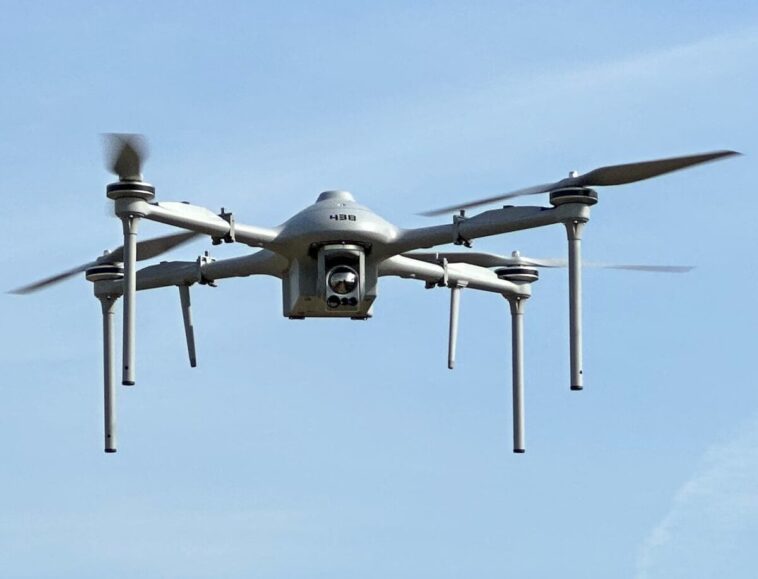
One of the report’s most alarming findings is the increasing use of commercially available drones by terrorist organisations. According to the UN, the Islamic State West Africa Province (ISWAP) carried out about 10 armed drone attacks between 2024 and early 2026, including a coordinated assault involving four drones on a Nigerian military forward operating base in December 2024 that reportedly injured several soldiers.
The report also states that Jama’a Nusrat ul-Islam wa al-Muslimin (JNIM), an al-Qaeda-affiliated extremist group operating across the Sahel, conducted at least 89 drone missions across Mali, Burkina Faso and Togo between 2023 and 2025. Security experts say these are often inexpensive commercial quadcopters modified to carry explosive payloads such as grenades or mortar rounds, reflecting a growing trend seen in conflicts around the world.
Beyond the battlefield, the UN warned that extremist groups are increasingly turning to cryptocurrency to finance their operations. The Security Council briefing came just days after President Bola Tinubu signed Nigeria’s Virtual Assets Coordination Executive Order, establishing a national framework involving the Central Bank of Nigeria, the Nigeria Financial Intelligence Unit, the Office of the National Security Adviser and other key institutions to strengthen oversight of digital assets and combat money laundering and terrorism financing.
According to the report, ISWAP-linked media platforms have openly solicited Bitcoin donations from supporters, while blockchain intelligence firms have documented cases in which cryptocurrencies were allegedly used to acquire drones, weapons and other logistical supplies. Investigators have also identified online channels providing guidance on digital wallets and cryptocurrency transactions, allowing extremist networks to receive financial support from sympathisers across different countries while bypassing traditional banking systems.
The UN also highlighted the growing overlap between terrorism, banditry and organised crime in parts of Nigeria and the wider Sahel. It cited recent security operations linking kidnappings in Oyo State to Ansaru, a Boko Haram splinter faction, alongside the discovery of a large methamphetamine laboratory reportedly connected to foreign criminal networks. According to the report, such developments demonstrate how extremist groups are diversifying their sources of funding while exploiting ungoverned spaces to expand their influence.
Although Nigerian security forces have recorded notable successes, including the surrender of insurgents and the reported killing of senior ISWAP commander Abu-Bilal al-Minuki during a joint operation with international partners, the UN cautioned that terrorist groups are adapting rather than disappearing. Security analysts believe many extremist organisations are reducing their dependence on large numbers of fighters while investing more heavily in technology, intelligence and financial networks capable of sustaining sophisticated operations.
To counter the evolving threat, the UN and security experts are urging Nigeria and its regional partners to modernise their counterterrorism strategies through investments in counter-drone technology, stronger blockchain tracing capabilities, tighter regulation of commercial drone imports and enhanced intelligence sharing across West Africa. The report also stresses the importance of deeper regional cooperation despite political tensions that have complicated joint security efforts in parts of the Sahel.
The UN’s latest warning underscores that terrorism in West Africa is entering a new era in which digital technology has become as important as conventional weapons. As Nigeria begins implementing its new virtual assets regulatory framework, security experts say the country’s success will depend not only on military operations but also on its ability to disrupt terrorist financing, monitor emerging technologies and strengthen cooperation with regional and international partners.
With extremist groups increasingly combining drones, cryptocurrencies and encrypted communications, the challenge facing Nigeria is no longer confined to the battlefield. It has become digital, financial and transnational, requiring a coordinated response capable of keeping pace with an increasingly sophisticated and technologically enabled threat.

 Shola Akinyele
22 Views
Shola Akinyele
22 Views














 and then
  WhatsApp us
Comments